






Ventilation is an essential part of modern commercial and industrial buildings. In the UAE, where high outdoor temperatures, humidity, dust and intensive air-conditioning use are common, an effective ventilation system plays an important role in maintaining indoor air quality, controlling heat and protecting equipment.
Selecting a ventilation fan, however, is not simply a matter of choosing the largest fan available. The correct selection depends on the building size, required airflow, static pressure, application, installation conditions and operating environment.
For warehouses, factories, workshops, commercial kitchens, parking areas, offices and other facilities, understanding these factors helps ensure that the ventilation system delivers the required performance without unnecessary energy consumption or excessive noise.
This guide explains the key considerations when selecting a ventilation fan for commercial and industrial applications in the UAE.
Why Ventilation Is Important in the UAE
Buildings in the UAE are exposed to high ambient temperatures for a significant part of the year. Although air-conditioning systems provide cooling, mechanical ventilation is required in many applications to remove contaminated, humid or excessively hot air and maintain suitable indoor conditions.
In an industrial facility, heat can be generated by machinery, electrical equipment, production processes and lighting. Warehouses can also experience heat buildup beneath the roof, particularly when natural air movement is limited.
Workshops and manufacturing areas may have additional ventilation requirements because of welding fumes, dust, vapours or other airborne contaminants. Commercial kitchens generate large quantities of heat, steam, smoke and cooking odours, while bathrooms and enclosed rooms require exhaust ventilation to control moisture and odours.
An appropriately designed ventilation system helps manage these conditions by providing controlled air movement and air exchange.
What Should Be Considered When Selecting a Ventilation Fan?
The most important consideration when selecting a ventilation fan in the UAE is the actual duty required from the fan.
Airflow capacity is normally expressed in CFM (Cubic Feet per Minute) or CMH (Cubic Metres per Hour). Static pressure is generally measured in Pascals (Pa).
A fan should be selected to provide the required airflow at the actual operating static pressure. Looking only at the maximum or free-air airflow rating can lead to an unsuitable selection, as the fan’s airflow typically decreases as system resistance increases.
The application should therefore be assessed before choosing the fan. Important factors include room volume, required air changes, heat generation, contaminant levels, duct length, filters, louvres, dampers and other components that can affect airflow.
Understanding Airflow and Air Changes
Air Changes per Hour (ACH) is commonly used as an initial method for estimating ventilation requirements. ACH indicates how many times the air volume within a room is replaced during one hour.
The basic calculation is:
Required Airflow (CMH) = Room Volume (m³) × Required ACH
For example, consider a warehouse measuring 30 metres long, 20 metres wide and 6 metres high.
Room Volume = 30 × 20 × 6 = 3,600 m³
If the required ventilation rate is 6 air changes per hour:
Required Airflow = 3,600 × 6 = 21,600 CMH
This provides a preliminary airflow requirement. The final fan selection must also consider static pressure, air distribution, temperature, building use and the characteristics of the ventilation system.
ACH requirements vary significantly according to the application. A storage warehouse, manufacturing workshop, commercial kitchen and chemical-handling area will not have the same ventilation requirements.
For engineering-critical applications, airflow calculations should be verified by a qualified HVAC professional.
Static Pressure: An Important Part of Fan Selection
Static pressure is one of the most commonly overlooked factors when selecting an industrial ventilation fan.
When air passes through ductwork, filters, grilles, louvres, dampers and bends, resistance is created. The fan must generate sufficient pressure to overcome this resistance while still delivering the required airflow.
For example, a wall-mounted exhaust fan discharging directly outdoors may operate with relatively low system resistance. A fan connected to a long duct system with several bends and filters will face considerably greater resistance.
This is one reason why a fan with a high advertised CFM rating may not deliver the expected airflow after installation.
A proper fan selection should therefore consider the complete system pressure drop rather than the fan’s free-air performance alone.
Axial Fans vs Centrifugal Fans
Axial and centrifugal fans are widely used for commercial and industrial ventilation, but they operate differently and are suited to different applications.
Axial Fans
An axial fan moves air parallel to the shaft of the fan. These fans can provide high air volumes and are commonly used where system resistance is relatively low.
Typical applications include warehouses, factories, workshops, parking areas and general building ventilation.
Wall-mounted axial exhaust fans can be particularly useful where hot or stale air needs to be discharged directly outside without extensive ductwork.
Centrifugal Fans
A centrifugal fan draws air into the centre of an impeller and discharges it radially. This design can generate higher pressure than many axial fan arrangements and is therefore suitable for systems where air must pass through ductwork, filters or other restrictive components.
Centrifugal fans are commonly considered for applications such as industrial extraction, fume removal, filtration systems and ducted ventilation.
The choice between axial and centrifugal technology should be based on the required airflow and system resistance rather than simply the physical size or motor power of the fan.
| Selection Factor | Axial Fan | Centrifugal Fan |
| Airflow | High volume | Moderate to high |
| Static pressure | Generally low to medium | Medium to high |
| Typical installation | Direct discharge or short ductwork | Ducted systems |
| Suitable applications | Warehouses, factories, general ventilation | Extraction, filtration, high-resistance duct systems |
| Main advantage | High airflow with relatively simple installation | Higher pressure capability |
Choosing Ventilation Fans for Warehouses and Factories
Industrial facilities often require continuous air movement because of heat generated by equipment, machinery and production processes.
For a warehouse in Dubai, for example, roof-level heat accumulation can become a significant concern during hot weather. Exhaust fans can be positioned to remove accumulated hot air, while suitable openings or supply fans provide replacement air.
Factory ventilation requires a more detailed assessment. If the facility contains welding operations, paint spraying, chemicals, dust-generating processes or other contaminants, general-purpose ventilation may not be sufficient.
In these cases, the extraction system should be designed around the specific contaminant and its source. Localised extraction can be more effective than simply increasing the general room airflow because it captures contaminants before they spread throughout the working area.
This makes industrial exhaust fan selection an important part of the overall ventilation design.
Commercial Kitchen Ventilation
Commercial kitchens have demanding ventilation requirements because cooking produces heat, steam, grease, smoke and odours.
A kitchen exhaust system normally includes an extraction hood, ductwork and an appropriately selected exhaust fan. The fan must be capable of maintaining the required airflow while overcoming resistance from the hood, filters and duct system.
Choosing a kitchen exhaust fan based only on the fan’s free-air CFM can therefore lead to inadequate extraction.
The type and quantity of cooking equipment, hood dimensions, duct configuration and operating conditions should all be considered during system design.
Bathroom and Toilet Ventilation
Bathrooms and toilets require ventilation primarily to control moisture, odours and stale air.
A suitable bathroom exhaust fan can provide continuous or controlled extraction depending on the application. Small spaces may use ceiling-mounted or wall-mounted fans, while larger commercial facilities may use centralised exhaust systems.
The required airflow should be determined according to the room size and intended use. Excessive airflow is not necessarily beneficial if it creates unnecessary noise or causes excessive conditioned air to be lost from the building.
Roof-Mounted and Cabinet Ventilation Systems
Roof-mounted ventilation is commonly used in larger commercial and industrial buildings where heat and contaminated air need to be discharged above the occupied space.
A rooftop cabinet fan can provide a practical solution where the fan and associated components need to be installed externally. The selection should take into account airflow, static pressure, weather exposure, motor protection and access for maintenance.
Roof-mounted equipment in the UAE should be suitable for the local environmental conditions. Exposure to high temperatures, dust and humidity makes material selection and motor protection particularly important.
Selecting a Fan for the UAE Climate
The operating environment should be considered carefully when selecting a ventilation fan supplier in Dubai or purchasing ventilation equipment for UAE projects.
Dust can accumulate on fan blades, motors and electrical components. High ambient temperatures can increase motor operating temperatures, while humidity and coastal conditions may accelerate corrosion.
For outdoor and exposed installations, the enclosure’s IP rating should be checked against the actual environmental conditions. The appropriate rating depends on the application and manufacturer’s specifications.
Material selection is also important. Galvanised steel, stainless steel and protective coatings may be suitable for different environments, depending on the level of humidity, dust and corrosive exposure.
It is also important to check the manufacturer’s specified ambient operating temperature. A motor designed for moderate ambient conditions may not be appropriate for every high-temperature installation in the UAE.
Energy Efficiency and Operating Costs
Ventilation fans can operate for many hours each day, particularly in factories, warehouses, kitchens and commercial facilities. Consequently, fan efficiency can have a measurable impact on operating costs.
A properly selected fan should operate close to its required duty point. Oversizing a fan can result in unnecessary energy consumption, while an undersized fan may operate continuously without achieving the required ventilation level.
For applications where the ventilation requirement changes during the day, variable-speed control may provide additional energy savings. A compatible Variable Frequency Drive (VFD) can adjust motor speed according to actual airflow demand.
However, VFD compatibility should always be confirmed with the fan and motor manufacturer before installation.
Fan Performance Curves
Fan performance curves provide valuable information when selecting an industrial or commercial ventilation fan.
A typical fan curve shows the relationship between airflow and static pressure. As static pressure increases, the available airflow generally decreases.
The system designer should identify the required operating point and confirm that the selected fan can deliver the required airflow at that pressure.
Selecting a fan from its maximum CFM rating alone is therefore not sufficient for a technically reliable installation.
For professional HVAC projects, the fan performance curve should be reviewed together with the system resistance calculation.
Noise and Vibration Considerations
Noise is an important factor in commercial environments, offices, restaurants, retail spaces and other occupied buildings.
Fan noise depends on several factors, including fan speed, airflow, motor characteristics, installation arrangement and ductwork. Selecting a fan that operates within its appropriate performance range can help avoid unnecessary noise.
Vibration should also be considered, particularly for larger industrial fans. Proper mounting, balancing and vibration isolation can reduce structural vibration and mechanical stress.
Regular inspection is recommended for continuously operating fans to identify loose fasteners, bearing problems, damaged components or abnormal vibration at an early stage.
Installation and Maintenance
Correct installation is essential for achieving the performance indicated by the manufacturer.
The fan should be mounted securely and installed with adequate clearance around the inlet and discharge. Ductwork should be appropriately sized, and unnecessary sharp bends should be avoided where possible.
Electrical connections should be completed by qualified personnel, with appropriate motor protection and grounding.
Maintenance requirements depend on the fan type and operating environment. In dusty UAE industrial environments, regular cleaning of fan blades and inspection of motors can be particularly important. Bearings, belts, electrical terminals, mounting hardware and vibration levels should also be checked according to the manufacturer’s recommended maintenance schedule.
A well-maintained ventilation fan can provide more consistent airflow and help reduce unexpected equipment failures.
Choosing the Right Ventilation Fan Supplier in UAE
For commercial and industrial projects, selecting the right ventilation fan supplier in the UAE is as important as selecting the fan itself. The supplier should be able to provide appropriate product information, technical specifications and assistance based on the actual application.
Cannelle Holdings supplies ventilation solutions for commercial, industrial and building applications across the UAE. Our ventilation product range includes established brands such as GREENBREEZE and VENTS, with options for different airflow and installation requirements.
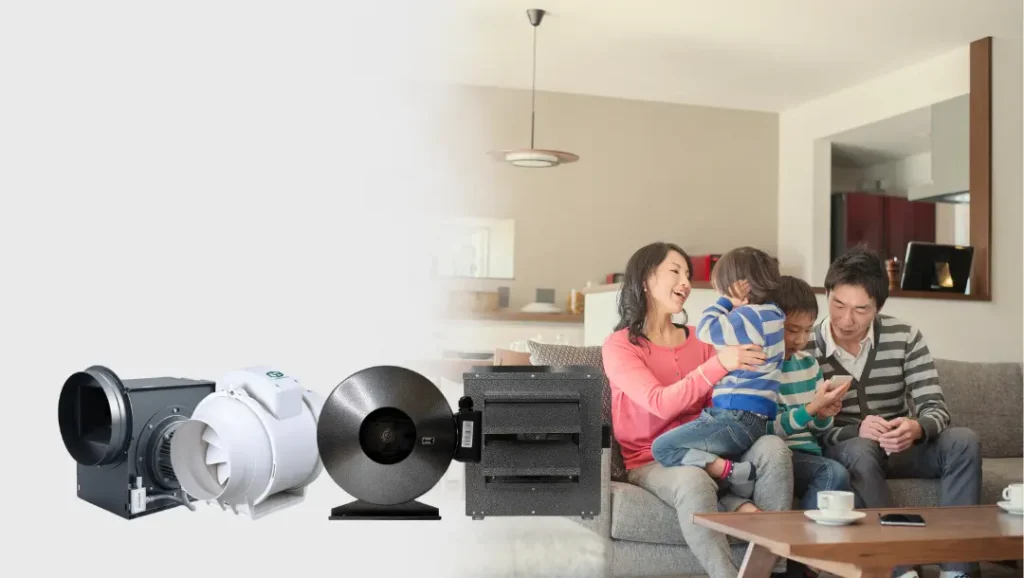
Depending on the application, ventilation solutions can include industrial exhaust fans, axial fans, centrifugal fans, duct fans, mixed-flow fans, wall-mounted fans, rooftop cabinet fans, kitchen exhaust fans and bathroom fans.
Whether the requirement is for a warehouse, factory, workshop, restaurant, commercial building or other facility, the correct fan should be selected based on airflow, static pressure, installation conditions and operating environment.
Conclusion
Selecting the right ventilation fan requires more than comparing fan sizes or maximum airflow figures. The application, required air changes, airflow, static pressure, duct resistance, operating environment, energy efficiency and maintenance requirements should all be considered before making a selection.
For facilities in the UAE, additional attention should be given to high ambient temperatures, dust, humidity and outdoor exposure. A correctly selected and properly installed ventilation system can provide effective air movement, improve indoor conditions and support reliable building operation.
Cannelle Holdings provides a range of ventilation products for commercial and industrial applications, including GREENBREEZE and VENTS ventilation solutions. From industrial exhaust and duct ventilation to roof top cabinet fans, kitchen exhaust fans and bathroom fans, the appropriate solution depends on the specific requirements of each project.
For professional advice on selecting a ventilation fan in Dubai or across the UAE, contact Cannelle Holdings with your project requirements, airflow needs or application details.
