






Rooftop exhaust fans are widely used in commercial, industrial and large residential buildings to remove hot air, smoke, odours, moisture and stale air. They are an important part of effective industrial ventilation and commercial ventilation systems, especially in buildings where natural ventilation is not sufficient.
In the UAE, rooftop exhaust fans are commonly used in warehouses, factories, workshops, commercial kitchens, restaurants, showrooms, storage facilities and other large buildings where controlling heat and air quality is important.
If you are looking for a rooftop exhaust fan supplier in the UAE, understanding airflow capacity, fan type, motor specifications, static pressure and installation requirements can help you select the right ventilation solution for your project.
What Is a Rooftop Exhaust Fan?
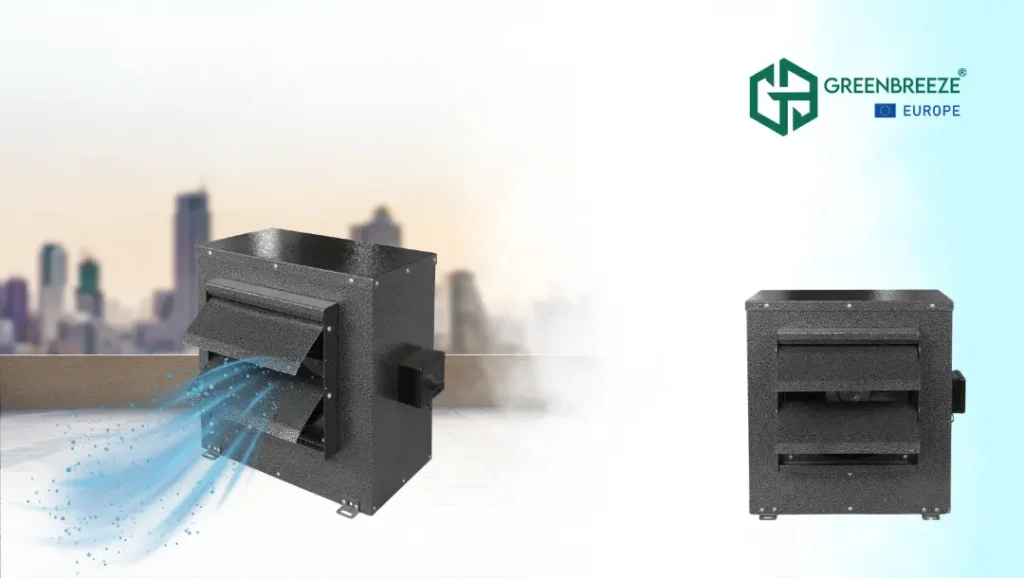
A roof top exhaust fan, also called a roof mounted exhaust fan, is a mechanical ventilation fan installed on the roof of a building. Its main purpose is to extract unwanted indoor air and discharge it outside.
Hot air naturally rises and collects near the ceiling. A roof-mounted exhaust fan helps remove this accumulated hot air directly from the highest part of the building.
Roof-top exhaust fans can be used for:
- Removing hot and stale air
- Improving air circulation
- Controlling humidity and moisture
- Removing smoke and odours
- Extracting fumes from industrial areas
- Improving indoor ventilation
- Reducing heat buildup in large spaces
For larger buildings, roof exhaust fans can be combined with fresh air fans, duct fans, louvres and other HVAC ventilation equipment.
Roof Top Exhaust Fans for Commercial and Industrial Buildings
Commercial and industrial buildings often require continuous ventilation because of high occupancy, machinery, heat-producing equipment or specific processes.
A properly designed industrial ventilation system can help remove unwanted air while introducing sufficient fresh air into the building.
Roof top exhaust fans are particularly useful where:
- The building has a large floor area.
- Ceiling height is high.
- Heat accumulates near the roof.
- Wall space is limited.
- Natural ventilation is insufficient.
- Industrial processes generate heat or fumes.
- Large quantities of air need to be extracted.
For warehouses, factories and workshops, selecting an exhaust fan based on the actual airflow requirement is essential for achieving effective ventilation.
Applications of Roof Top Exhaust Fans
1. Warehouse Ventilation
Warehouses in the UAE can experience significant heat buildup, particularly during summer. A warehouse exhaust fan can help extract hot air from the building and improve overall air movement.
Roof-mounted exhaust fans are suitable for warehouses, distribution centres, storage facilities and logistics buildings where large volumes of air need to be exchanged.
2. Factory and Industrial Ventilation
Factories can generate heat, fumes, dust and odours depending on the manufacturing process.
Industrial exhaust fans can be installed as part of a complete ventilation system to remove unwanted air from production and working areas.
The required fan capacity depends on the size of the facility, heat load, contaminants and required air changes.
3. Commercial Kitchen Exhaust
Commercial kitchens generate heat, steam, smoke, grease and cooking odours.
A properly designed commercial kitchen exhaust system helps remove these pollutants and maintain better working conditions.
Kitchen ventilation may require specialised exhaust equipment, ductwork, filters and other components depending on the application and local requirements.
4. Workshop Ventilation
Automotive workshops, maintenance facilities and industrial workshops can experience heat, fumes and unpleasant odours.
A suitable workshop exhaust fan can help extract contaminated air and improve general ventilation.
5. Restaurant Ventilation
Restaurants require effective ventilation to control cooking heat, odours and airborne contaminants.
Roof exhaust fans can form part of a restaurant’s overall ventilation and kitchen exhaust system when correctly sized and installed.
6. Showrooms and Commercial Spaces
Retail stores, showrooms and other commercial buildings may require mechanical exhaust ventilation when natural airflow is insufficient.
A roof-mounted ventilation fan can help improve air movement while keeping the equipment away from occupied wall areas.
Benefits of Roof Top Exhaust Fans
Removes Hot Air from Large Buildings
One of the main advantages of roof top exhaust fans is their ability to remove hot air that accumulates near the ceiling.
This is especially useful for warehouses, factories and industrial buildings in the UAE.
Improves Indoor Air Quality
Exhaust fans remove stale and unwanted air from indoor spaces, helping improve general ventilation.
When combined with an adequate fresh-air supply, an exhaust system can provide better overall air circulation.
Helps Control Heat and Humidity
Excessive heat and moisture can create uncomfortable working conditions and contribute to condensation.
A properly designed ventilation system helps remove heat and moisture-laden air from the building.
Removes Smoke, Odours and Fumes
Industrial processes, kitchens and workshops can produce unwanted fumes and odours.
Roof exhaust fans can help extract these pollutants when the system is appropriately designed for the application.
Suitable for Large Industrial Spaces
Roof exhaust fans are available in different airflow capacities and configurations, making them suitable for many commercial and industrial applications.
Multiple fans can also be installed where a single fan cannot provide the required airflow.
Efficient Use of Building Space
Because the fan is installed on the roof, valuable wall and floor space can remain available for other purposes.
How to Choose the Right Roof Top Exhaust Fan
Choosing the correct roof top exhaust fan for your building requires consideration of several technical factors.
1. Airflow Capacity
Airflow is one of the most important specifications when selecting an exhaust fan.
Fan airflow is commonly measured in:
- CFM – Cubic Feet per Minute
- m³/h – Cubic Metres per Hour
The required airflow depends on building volume, application, occupancy, heat generation and required air changes per hour.
For example, a small workshop and a large warehouse will require very different exhaust fan capacities.
2. Static Pressure
If the fan is connected to ductwork, filters, louvres or other ventilation components, the system creates resistance to airflow.
This resistance is known as static pressure.
The fan should be selected based on its ability to provide the required airflow at the actual operating static pressure, rather than relying only on its maximum free-air airflow rating.
3. Fan Motor and Power
Check the motor specifications before purchasing a roof exhaust fan.
Important specifications include:
- Motor power
- Voltage
- Frequency
- Motor efficiency
- Protection rating
- Operating temperature
- Continuous-duty capability
For UAE projects, the operating environment and high ambient temperatures should be considered during equipment selection.
4. Fan Size
The physical size of the exhaust fan is not the same as its ventilation capacity.
Instead of choosing a fan based only on diameter or dimensions, compare its airflow performance, static pressure capability and motor specifications.
5. Noise Level
For restaurants, commercial buildings and occupied areas, noise levels should be considered.
Check the manufacturer’s noise specifications before selecting a fan for applications where low operating noise is important.
6. Weather Protection
Since rooftop exhaust fans are exposed to outdoor conditions, the equipment should be suitable for the installation environment.
Consider:
- Rain protection
- Corrosion resistance
- UV exposure
- Outdoor temperature
- Roof mounting arrangement
- Weatherproof electrical components
7. Installation Requirements
Before ordering a roof-mounted exhaust fan, confirm:
- Roof opening dimensions
- Mounting requirements
- Fan dimensions
- Electrical supply
- Duct connection requirements
- Roof curb requirements
- Maintenance access
- Required airflow direction
Correct installation is essential for achieving the expected performance.
How Many Roof Exhaust Fans Does a Building Need?
No single number of exhaust fans suits every building.
The required number depends on:
- Building length and width
- Ceiling height
- Total building volume
- Required air changes
- Heat generation
- Number of occupants
- Type of industrial activity
- Required exhaust airflow
- Fresh-air supply
A ventilation professional can calculate the required airflow and determine whether the project needs one large fan or multiple smaller exhaust fans.
Roof Top Exhaust Fan vs Wall Exhaust Fan
Both roof and wall exhaust fans can be used for mechanical ventilation, but the right option depends on the building design.
Roof top exhaust fans are particularly useful when hot air accumulates near the ceiling or when roof-level extraction provides a practical ventilation solution.
Wall-mounted exhaust fans may be better suited to smaller spaces where direct wall discharge is possible.
For large warehouses, factories and commercial buildings, the ventilation layout should be assessed before choosing between roof and wall-mounted systems.
Do Roof Top Exhaust Fans Reduce Building Temperature?
Roof top exhaust fans can help reduce heat buildup by extracting hot air from the upper areas of a building.
However, an exhaust fan should not be considered a replacement for an air-conditioning system.
Its primary purpose is ventilation and air extraction. The actual temperature reduction depends on the building design, outdoor conditions, incoming fresh air, insulation, heat sources and fan capacity.
In large industrial spaces, combining ventilation with appropriate insulation and cooling solutions can provide better overall environmental control.
Roof Top Exhaust Fan Maintenance
Regular maintenance helps maintain airflow performance and extend equipment life.
Important maintenance activities include:
- Cleaning fan blades
- Checking motor operation
- Inspecting electrical connections
- Checking belts where applicable
- Inspecting bearings
- Checking vibration and unusual noise
- Removing dust and debris
- Inspecting roof mounting
- Checking weatherproofing
- Ensuring exhaust outlets are not blocked
Industrial and commercial exhaust fans may require more frequent maintenance depending on the operating environment.
Common Mistakes When Buying a Roof Top Exhaust Fan
Choosing Based Only on Price
The cheapest exhaust fan may not provide the required airflow or durability for your application.
Compare airflow, static pressure, motor specifications, construction quality and warranty before making a purchasing decision.
Selecting the Wrong Airflow Capacity
An undersized fan may not provide adequate ventilation, while an incorrectly oversized system can increase energy consumption and installation costs.
Ignoring Static Pressure
A fan may have a high advertised CFM rating but deliver significantly less airflow when connected to ductwork and other system components.
Not Considering the UAE Climate
Roof-mounted equipment is exposed to high outdoor temperatures and weather conditions. The fan should be suitable for the actual installation environment.
Ignoring Fresh Air Requirements
Exhausting air from a building requires an adequate replacement-air path. Without sufficient fresh-air intake, the ventilation system may not operate as expected.
Where to Buy Rooftop Exhaust Fans in UAE?
If you are looking for a rooftop exhaust fan supplier in the UAE, it is important to choose a supplier that can provide suitable ventilation equipment based on your project requirements.
Cannelle Holdings supplies HVAC and ventilation products for commercial, industrial and project requirements in the UAE.
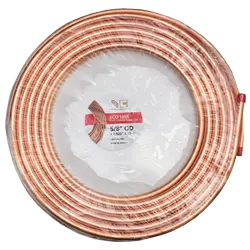
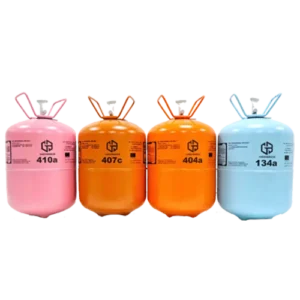
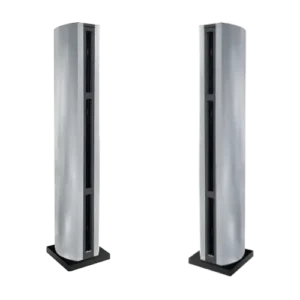
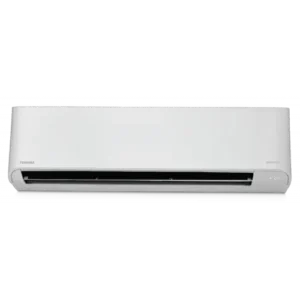
Our HVAC product range includes ventilation fans, exhaust fans, duct fans, air curtains, air-conditioning products, copper pipes and coils, refrigerant gases, HVAC tools and related materials.
Whether you need ventilation equipment for a warehouse, factory, commercial kitchen, workshop, restaurant or commercial building, selecting the correct product specifications is essential.
Conclusion
Roof-top exhaust fans provide an effective method of removing hot, stale, humid and unwanted air from commercial and industrial buildings.
From warehouses and factories to commercial kitchens, restaurants and workshops, the correct roof-mounted exhaust fan can improve ventilation and help create a more suitable indoor environment.
However, selecting the right fan requires more than checking the fan size. Airflow, static pressure, motor specifications, building volume, operating conditions, installation requirements and fresh-air supply should all be considered.
If you are planning a ventilation project and need a rooftop exhaust fan, industrial exhaust fan or commercial ventilation solution in the UAE, Cannelle Holdings can support your HVAC material requirements.
Contact Cannelle Holdings today for ventilation products, technical specifications and project requirements.
