




Manhole covers are one of those essential construction components that often go unnoticed—until a problem arises. A cracked cover on a busy road in Dubai, a corroded lid in coastal Abu Dhabi, or an undersized access chamber in a Sharjah industrial site can quickly turn into safety risks, project delays, and unexpected costs.
For contractors, developers, MEP consultants, and procurement teams in the UAE, having a clear understanding of what manhole covers are, what they are classified as, which materials to choose, and how to select the right supplier is critical for smooth project execution.
This guide is designed to provide a comprehensive overview, helping you make informed decisions, avoid common mistakes, and ensure long-term success in your projects.
What Is a Manhole Cover?
A manhole cover is a removable lid that sits over a utility access chamber, which is built into the ground. These chambers give maintenance teams access to underground networks, drainage pipes, sewerage lines, telecom cables, electricity conduits, and water supply systems.
The cover serves two purposes. First, it keeps the chamber protected from surface traffic, debris, and rainwater. Second, it keeps people and vehicles safe by preventing anyone from accidentally falling into an open shaft.
In a city like Dubai, where underground utility networks run beneath every road, pavement, and building, manhole covers are everywhere. Most people walk over them dozens of times a day without a second thought. But for the engineers and contractors who specify and install them, every detail matters: load rating, material, size, frame type, and compliance with local authority standards.
Why Manhole Cover Selection Matters More in the UAE
The UAE presents a specific set of challenges that make material and product selection more demanding than in many other parts of the world.
Extreme Heat
Summer temperatures regularly exceed 45°C at the surface level, and the ground surface temperature can go much higher. Materials that perform well in European climates can warp, soften, or degrade rapidly under UAE conditions. Cast iron expands and contracts significantly with temperature changes, which can cause covers to become loose or jam in their frames over time.
Salt-Laden Coastal Environment
Dubai, Abu Dhabi, Sharjah, and most of the UAE coastline sit in a high-humidity, high-salinity environment. Metal covers without proper treatment corrode faster in these conditions. This is a major reason why composite and GRP covers have become the preferred choice for many UAE infrastructure projects.
Heavy Traffic Loads
The UAE road network carries significant volumes of heavy commercial vehicles — tankers, trailers, construction trucks, and delivery vehicles. Covers installed on or near roads must meet the D400 load class as a minimum, which means they need to withstand 40-tonne loads repeatedly without cracking or deforming.
High Construction Volume
The UAE runs thousands of simultaneous projects across all seven emirates. Suppliers who cannot meet project timelines cause real delays for contractors and developers.
Types of Manhole Covers Used in the UAE
Composite Manhole Covers
Composite covers made from glass fibre reinforcement combined with polymer concrete or resin compounds have become the dominant choice for residential, commercial, and infrastructure projects in the UAE over the past decade.
The advantages are clear: they do not rust, they perform well in coastal environments, they are significantly lighter than cast iron, and because they contain no scrap metal value, theft is not a concern. Noise under vehicle traffic is also noticeably reduced compared to metal covers.
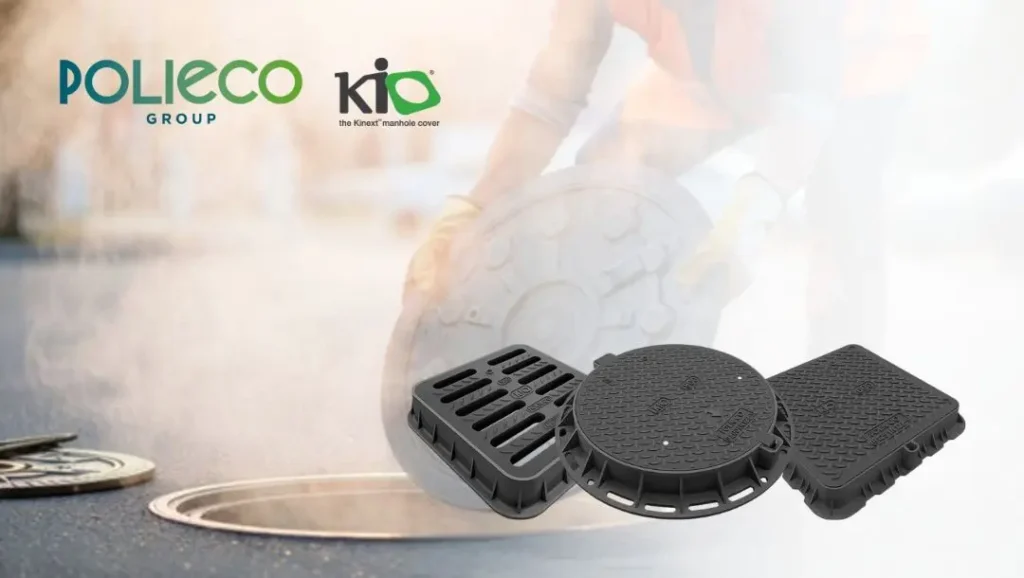
Well-established brands such as KIO and Polieco are manufactured to EN124 standards and are the most frequently specified by consultants and municipality engineers across the UAE. The KIO range covers multiple load classes: 15kN, B125, C250, D400, and Trench, making it one of the more comprehensive options available locally.
GRP Manhole Covers
GRP (Glass Reinforced Plastic) covers share the corrosion-resistance properties of composite covers but are particularly suited to landscaping zones, pedestrian walkways, and light-duty utility chambers.
They are UV-resistant, important for a country where outdoor surfaces endure intense year-round sunlight and available in multiple colours, which makes them useful when blending drainage infrastructure into a landscape design. For A15 and B125 applications in villa communities, hotel gardens, public parks, and pedestrian plazas, GRP covers are a practical and visually clean solution.
Stainless Steel Manhole Covers
When hygiene standards are strict in commercial kitchens, food processing plants, hospitals, pharmaceutical facilities, and luxury hospitality developments, stainless steel manhole covers are the correct specification. Grade 304 suits standard hygienic interiors; Grade 316 is recommended for coastal, chemical, or coastal installations. SS covers are also used on rooftops, podium decks, and pool surrounds.
Steel and Metal Manhole Covers
Traditional steel and ductile iron covers remain in use across industrial sites, factory floors, warehouse yards, and loading bays. They offer raw strength for heavy-duty environments and are available in large custom configurations.
Steel manhole cover suppliers in Dubai and metal manhole cover suppliers in Dubai primarily serve industrial zones, such as Al Quoz, Jebel Ali, Sharjah Industrial Area, and Khalifa Industrial Zone in Abu Dhabi, where heavy machinery and constant vehicle loads are part of daily operations.
These covers require more maintenance than composite alternatives, regular coating and inspection to manage corrosion, but remain cost-effective for controlled industrial environments where appearance is secondary to pure load performance.
Cast Iron Manhole Covers
Cast iron covers are still found in older UAE infrastructure. For new projects, composite covers have largely replaced cast iron, which is heavy, vulnerable to coastal corrosion, and rarely the first choice in modern specifications.
Understanding Load Classes EN124 Standard
Every manhole cover sold in the UAE for infrastructure and road use should be tested and classified according to EN124, which is the European standard for manhole covers and gully tops. This is the most widely referenced standard in the UAE municipality and engineering specifications.
The load classes are as follows:
| Class | Load Capacity | Where It Is Used |
| A15 (15kN) | 1.5 tonnes | Pedestrian zones, gardens, and cycle paths |
| B125 | 12.5 tonnes | Footpaths, car parks, light vehicle areas |
| C250 | 25 tonnes | Roadside channels, slow vehicle access |
| D400 | 40 tonnes | Main roads, highways, public carriageways |
| E600 | 60 tonnes | Docks, aircraft aprons, and very heavy industrial |
| F900 | 90 tonnes | Exceptional heavy load industrial areas |
For most residential and commercial projects in the UAE, B125 and C250 covers are sufficient. For road works, municipality drainage networks, and any area with heavy vehicle access, D400 is the standard minimum requirement.
If you are a contractor and you are not sure which load class your project requires, check the project specification document first. If nothing is stated, consult the local municipality authority, Dubai Municipality, Abu Dhabi City Municipality, or Sharjah Municipality for the applicable standard in your project location.
Frame Types and Installation Considerations
Choosing the right cover is only half the job. The frame, the component that sits permanently in the concrete surround and holds the cover in place, needs equal attention.
Single-Seal Frames: The standard option where the cover sits directly in the frame with a simple seating.
Double-Seal Frames: Provide extra protection against odour, gas, and water. Ideal for sewer and watertight applications.
Recessed Frames: Designed to hold infill materials like tiles, concrete, or paving, allowing the cover to blend with the surroundings. Common in commercial and public spaces.
Anti-Tilt & Anti-Slip Features: Prevent movement under traffic and reduce slip risks, improving safety.
Installation Tips: Ensure proper curing of concrete, level frame positioning, and use of correct bedding materials as per manufacturer guidelines.
Where Manhole Covers Are Used in UAE Projects
Residential Developments: B125 or A15 covers for garden and courtyard areas; D400 at any point with vehicle access.
Roads and Highways: D400 on carriageways; C250 at kerbside and footpath drainage channels. Dubai Municipality, Abu Dhabi, and Sharjah Municipality all enforce strict specifications on public road projects.
Commercial and Mixed-Use: D400 in vehicle zones, B125 in pedestrian areas, stainless steel in food service and hygiene-critical locations.
Industrial Facilities: Heavy-duty D400 composite or metal covers with anti-tilt and locking features for Al Quoz, Jebel Ali, and Sharjah industrial zones.
Municipal Drainage Networks: Large-scale infrastructure projects requiring EN124-certified covers with double-seal frames and full documentation.
Landscaping and Public Realm: GRP or composite covers in recessed formats, blending drainage infrastructure into parks, plazas, and waterfront developments.
How to Choose the Right Manhole Cover Supplier in the UAE
The UAE market has no shortage of suppliers, but quality and reliability vary significantly. Here is what experienced project teams look for:
Product Certification
Any cover for road, municipality, or significant infrastructure use must be tested to EN 124. Ask for load test certificates and technical data sheets before ordering. A reputable supplier provides these without hesitation.
Brand Reputation
Established brands have decades of engineering development behind them and consistent manufacturing standards. Unbranded or generic covers may appear cheaper upfront, but carry a higher risk of failure and offer no documented performance history.
Stock Availability
Construction timelines in the UAE are tight. Confirm that your supplier holds a ready stock of standard sizes and load classes. For large or custom orders, get lead times in writing before committing.
Technical Support
A good supplier reviews your project drawings, recommends the right product for each zone, and advises on frame types and installation requirements. This support is especially valuable for contractors without dedicated drainage engineers.
Full Product Range
Most projects need different cover types across different zones. A supplier who carries composite, GRP, stainless steel, and metal options alongside drainage pipes, HDPE fittings, and plumbing materials simplifies procurement and reduces coordination overhead significantly.
Geographic Coverage
Confirm delivery capability to your project location. Whether your site is in Al Quoz, Sharjah, Abu Dhabi, or the Northern Emirates, your supplier should serve the full UAE geography reliably.
Common Mistakes to Avoid When Specifying Manhole Covers
Wrong Load Class
The most frequent error. A cover installed for pedestrian use in an area that later becomes a vehicle access route is a serious safety risk. Always think about future use, not just current conditions.
Ignoring Coastal Corrosion
Specifying standard carbon steel in coastal or high-humidity locations without corrosion protection leads to rapid deterioration. In the UAE, this applies to most project locations.
Mismatching Cover and Frame
Cover and frame must be ordered as a matched pair from the same manufacturer. Mixing brands or sizes causes rocking, seal gaps, and premature wear.
Skipping Municipality Approval Check
Dubai Municipality, Abu Dhabi City Municipality, and other authorities maintain approved product lists. Non-approved products cause expensive delays at inspection.
Ordering Without Documentation
Never accept a cover without EN124 test certificates. If a supplier cannot provide this documentation, that is a warning sign that should not be ignored.
Final Thoughts
Manhole covers are a small line item in a construction budget but a high-consequence decision in terms of safety, compliance, and long-term performance. In the UAE, where the environment is demanding and project standards are high, getting this decision right from the start is far easier than dealing with failures, replacements, or authority rejections after installation.
Whether you are working on a road project in Abu Dhabi, a villa development in Dubai, an industrial facility in Al Quoz, or a commercial project in Sharjah take the time to specify the right cover, work with a supplier who can back up their products with certification and technical support, and make sure your drainage system works as a complete, coordinated solution.
For projects across the UAE, Cannelle Holdings provides composite KIO and Polieco brand manhole covers, GRP access covers, stainless steel covers, and the full range of drainage pipes, HDPE pipes, plumbing fittings, and building materials needed to complete your project from underground to surface level.
