







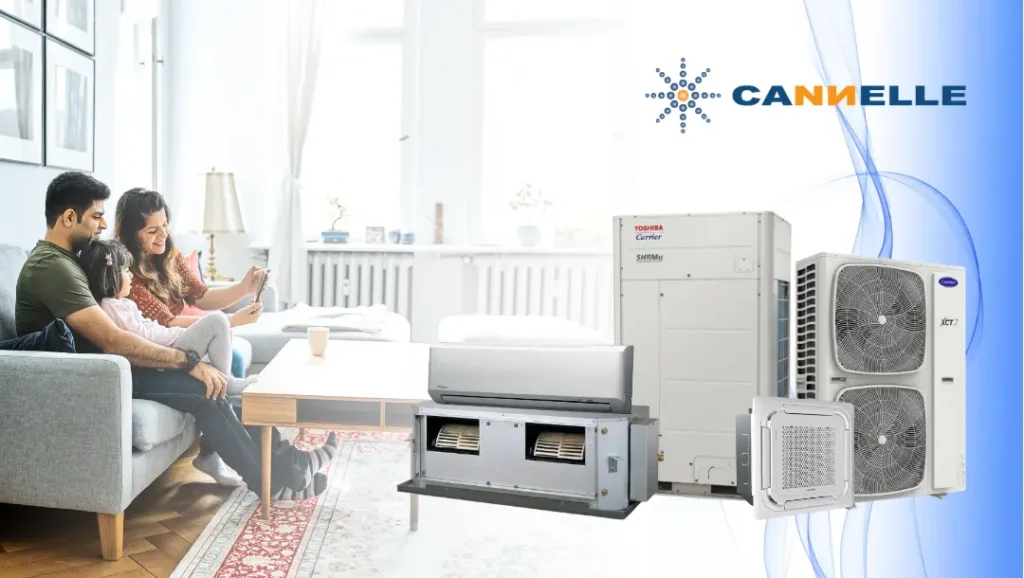
hoosing the right air conditioner capacity is essential for maintaining comfortable indoor temperatures, reducing electricity consumption and ensuring efficient cooling. Whether you are installing an air conditioning system in a villa, office, warehouse or commercial building in Dubai, understanding how to calculate AC tonnage will help you select the right equipment for your space.
Dubai’s extreme summer temperatures, high humidity, direct sunlight and building insulation can significantly affect cooling requirements. An undersized air conditioner may run continuously without reaching the desired temperature. At the same time, an oversized unit can cool the space too quickly, causing short cycling, poor humidity control, and unnecessary operating costs.
So, how do you calculate AC tonnage for your property? What size AC do you need for a 1,000 sq. ft. room? And which air conditioning system is suitable for villas, offices and warehouses?
This guide explains how to calculate AC tonnage step by step, understand BTU requirements, compare AC capacities and select suitable cooling systems for different applications in the UAE.
How Many Tons of AC Do You Need in Dubai?
As an initial planning estimate, cooling requirements can vary depending on the building type and conditions.
The following BTU allowances can be used for preliminary calculations:
| Building Type | Approximate Cooling Requirement |
| Villa / Residential | 30–40 BTU per sq. ft. |
| Office / Commercial | 35–45 BTU per sq. ft. |
| Warehouse / Industrial | 25–60 BTU per sq. ft. |
For example, a 1,000 sq. ft. space requiring 35 BTU per sq. ft. would need approximately 35,000 BTU/h, equivalent to 2.9 tons of refrigeration.
These figures are preliminary estimates, not final equipment selections. Actual cooling requirements depend on ceiling height, insulation, windows, occupancy, equipment and ventilation.
For larger villas, commercial buildings and warehouses, a professional HVAC load calculation is recommended.
What Is AC Tonnage?
AC tonnage refers to the cooling capacity of an air conditioning system. It does not indicate the physical weight of the unit. Instead, it measures the amount of heat an air conditioner can remove from an indoor space.
One ton of refrigeration (TR) is equivalent to 12,000 British Thermal Units per hour (BTU/h).
Understanding this conversion makes it easier to compare different air conditioning capacities when purchasing equipment.
AC Tonnage to BTU Conversion Chart
| AC Capacity | Cooling Capacity |
| 1 Ton | 12,000 BTU/h |
| 1.5 Ton | 18,000 BTU/h |
| 2 Ton | 24,000 BTU/h |
| 2.5 Ton | 30,000 BTU/h |
| 3 Ton | 36,000 BTU/h |
| 4 Ton | 48,000 BTU/h |
| 5 Ton | 60,000 BTU/h |
| 6 Ton | 72,000 BTU/h |
| 8 Ton | 96,000 BTU/h |
| 10 Ton | 120,000 BTU/h |
For example, if you see an air conditioner advertised with a cooling capacity of 24,000 BTU/h, it is equivalent to a 2-ton AC unit.
How to Calculate AC Tonnage: Step-by-Step Formula
Calculating AC tonnage involves measuring the area, estimating the cooling requirement and converting BTU into refrigeration tons.
AC Tonnage Formula:
AC Tonnage = Total Cooling Requirement (BTU/h) ÷ 12,000
Follow these steps to estimate the cooling capacity required for your property.
Step 1: Measure the Area You Want to Cool
First, measure the length and width of the room or building.
Formula:
Room Area = Length × Width
For example:
- Length: 20 feet
- Width: 15 feet
- Total Area: 300 sq. ft.
If the AC system serves multiple rooms, calculate the area of each space and consider the overall cooling zones.
Also, measure the ceiling height. Standard room calculations generally assume a ceiling height of approximately 2.7 to 3 metres. Higher ceilings may increase the cooling requirement.
For reference:
1 square metre = 10.76 square feet.
Step 2: Calculate the Base Cooling Load
Multiply the total floor area by the estimated BTU requirement per square foot.
Formula:
Base Cooling Load = Area (sq. ft.) × BTU per sq. ft.
For example, consider a 500 sq. ft. room with an estimated cooling requirement of 35 BTU per sq. ft.
500 × 35 = 17,500 BTU/h
The estimated cooling capacity is approximately 17,500 BTU/h.
Step 3: Adjust for Dubai’s Climate Conditions
The basic calculation provides an initial estimate. However, Dubai’s climate and building conditions can increase the actual cooling requirement.
Consider these important factors:
Sunlight Exposure: Rooms facing west or south and spaces with large glass windows may receive additional heat. A planning allowance of approximately 10–20% may be considered depending on exposure.
Roof Exposure: Top-floor rooms and warehouses with uninsulated metal roofs can experience higher heat gain. Roof exposure may require an additional allowance of approximately 10–25%.
Ceiling Height: Spaces with ceilings higher than 3 metres may require additional cooling capacity. A preliminary allowance of approximately 10% per additional metre can be considered for planning.
Occupancy: More people generate additional heat. An approximate allowance of 600 BTU/h per person beyond the first two occupants can be used for preliminary estimation.
Electrical Equipment and Lighting: Computers, printers, machinery and lighting generate heat. Equipment wattage can be converted into BTU/h by multiplying the wattage by 3.41.
Insulation and Glazing: Good wall and roof insulation, along with energy-efficient glazing, can reduce heat entering the building.
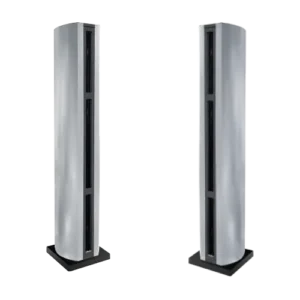
Ventilation and Door Openings: Warehouses, shops and commercial buildings with frequently opened doors may require additional cooling capacity. Air curtains can help reduce the exchange of hot outdoor air at entrances.
These allowances should not simply be added together without considering their actual contribution to the building’s heat load. A proper HVAC calculation evaluates the individual conditions.
Step 4: Convert BTU into AC Tonnage
After calculating the estimated cooling load, divide the total BTU/h by 12,000.
For example:
- Required cooling capacity: 36,000 BTU/h
- Conversion: 36,000 ÷ 12,000
- Required capacity: 3 Tons
Therefore, a cooling requirement of 36,000 BTU/h is equivalent to a 3-ton air conditioning system.
How to Calculate AC Tonnage for a Villa in Dubai?
Villas in Dubai often have different cooling requirements depending on their floor area, number of rooms, building orientation, roof exposure and insulation.
A villa with multiple bedrooms, large living areas, high ceilings and extensive glass windows may require considerably more cooling than a smaller property.
When calculating AC tonnage for a villa, consider:
- Total cooled floor area.
- Number of bedrooms and living spaces.
- Ceiling height and double-height areas.
- Window size and sunlight exposure.
- Roof and wall insulation.
- Number of occupants.
- Kitchen appliances and other heat-generating equipment.
- Ventilation and fresh-air requirements.
Worked Example: AC Tonnage for a 4,000 sq. ft. Villa
Consider a villa with 4,000 sq. ft. of cooled floor area.
Step 1: Calculate the base cooling load
4,000 × 35 = 140,000 BTU/h
Step 2: Add an illustrative 10% allowance for west-facing glass and a double-height living area
140,000 + 14,000 = 154,000 BTU/h
Step 3: Convert BTU into tons
154,000 ÷ 12,000 = 12.83 TR
The preliminary cooling requirement is approximately 12.8 tons.
A villa of this size may require multiple split units, a ductable AC system or a suitably designed package system, depending on its layout and cooling zones.
Which AC System Is Suitable for Villas?
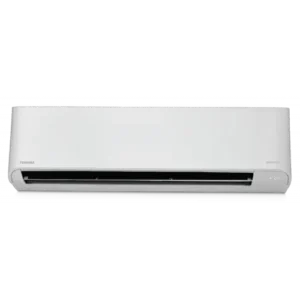
Split Air Conditioners: Suitable for individual bedrooms, smaller living areas and spaces requiring independent temperature control.
Ducted Air Conditioners: Suitable for larger villas requiring concealed cooling and centralised air distribution through ducts.
VRF Systems: Suitable for larger villas with multiple zones requiring independent temperature control.
The final selection depends on the building layout, cooling requirements and installation conditions.
How to Calculate AC Tonnage for an Office in Dubai?
Offices have different cooling requirements compared with residential properties because of employee occupancy, computers, lighting, meeting rooms and other electrical equipment.
A small office with limited workstations may require less cooling than a large commercial office with multiple employees and equipment.
When calculating AC capacity for an office, consider:
- Total office floor area.
- Number of employees.
- Computers, printers and electrical equipment.
- Lighting and internal heat generation.
- Meeting rooms and conference areas.
- Glass partitions and external windows.
- Fresh-air ventilation requirements.
- Operating hours and occupancy patterns.
Worked Example: AC Tonnage for a 2,000 sq. ft. Office
Consider an office with 2,000 sq. ft. of floor area and 20 employees.
Step 1: Calculate the base cooling load
2,000 × 40 = 80,000 BTU/h
Step 2: Calculate additional occupancy load
18 additional occupants × 600 = 10,800 BTU/h
Step 3: Calculate equipment load
Assume electrical equipment consumes approximately 4,000 watts.
4,000 × 3.41 = 13,640 BTU/h
Step 4: Calculate the total cooling requirement
80,000 + 10,800 + 13,640 = 104,440 BTU/h
Step 5: Convert into AC tonnage
104,440 ÷ 12,000 = 8.7 TR
The preliminary cooling requirement is approximately 8.7 tons.
Which AC System Is Suitable for Offices?
Ducted AC Systems: Suitable for open-plan offices, multiple rooms and commercial spaces requiring centralised cooling.
VRF Air Conditioning Systems: Suitable for larger offices with several zones requiring independent temperature control.
Package Unit AC Systems: Can be considered for larger commercial spaces depending on the building configuration and cooling requirements.
Choosing the right air conditioning system helps maintain a comfortable working environment while supporting efficient operation.
How to Calculate AC Tonnage for a Warehouse in Dubai?
Warehouses require a different approach to cooling because of their large floor areas, high ceilings, roof exposure, industrial equipment and frequent loading and unloading activities.
Unlike residential buildings, warehouse cooling requirements depend on the type of stored products, internal heat sources, ventilation and the required indoor temperature.
Important factors include:
- Total warehouse floor area.
- Ceiling and roof height.
- Roof insulation and heat exposure.
- Number of loading and unloading doors.
- Frequency of door openings.
- Stored materials and temperature requirements.
- Machinery and equipment generating heat.
- Number of workers.
- Fresh-air and ventilation requirements.
For some warehouses, it may be necessary to cool only occupied areas or temperature-sensitive storage zones instead of the entire building.
Worked Example: AC Tonnage for a 10,000 sq. ft. Warehouse
Consider a warehouse with 10,000 sq. ft. of floor area, an insulated roof and an 8-metre ceiling.
Step 1: Calculate the base cooling load
10,000 × 30 = 300,000 BTU/h
Step 2: Apply an illustrative 25% ceiling-height allowance
300,000 + 75,000 = 375,000 BTU/h
Step 3: Convert into AC tonnage
375,000 ÷ 12,000 = 31.25 TR
The preliminary cooling requirement is approximately 31 tons.
The actual requirement may be significantly different depending on how much of the warehouse needs cooling, roof construction, ventilation, stored materials and door openings.
Which AC System Is Suitable for Warehouses?
Package Unit AC Systems: Commonly considered for large commercial and industrial applications where centralised cooling is required.
Ducted AC Systems: Suitable for distributing conditioned air across different warehouse areas.
Industrial Ventilation Fans: Help improve air circulation and remove accumulated heat, depending on the application.
Air Curtains: Help reduce the entry of hot outdoor air through frequently used loading and entrance doors.
For large warehouses, a professional HVAC load calculation is essential before selecting the equipment.
AC Size Chart UAE: How Much Cooling Capacity Do You Need?
The following AC size chart provides an approximate reference for selecting air conditioner capacity based on floor area.
| Cooled Area | Villa / Home | Office |
| 250–350 sq. ft. | 1 Ton | 1–1.5 Tons |
| 350–550 sq. ft. | 1.5 Tons | 2 Tons |
| 550–750 sq. ft. | 2 Tons | 2.5–3 Tons |
| 750–1,000 sq. ft. | 2.5–3 Tons | 3–3.5 Tons |
| 1,000–1,500 sq. ft. | 4–5 Tons | 4.5–6 Tons |
| 1,500–2,500 sq. ft. | 6–8 Tons | 7–10 Tons |
This chart is an approximate planning reference based on typical Dubai conditions and standard ceiling heights. Actual requirements may vary depending on building design, insulation, occupancy, windows and equipment.
How Many Square Feet Does a 1-Ton AC Cover?
There is no fixed floor area that every 1-ton air conditioner can cool.
In moderate conditions, one ton may cover approximately 400–600 sq. ft. However, in Dubai’s hot climate, a preliminary estimate may be closer to 300–400 sq. ft. depending on insulation, ceiling height and heat exposure.
For accurate selection, always consider the actual cooling load rather than relying on floor area alone.
Which Type of AC System Should You Choose?
Once you calculate the approximate AC tonnage, the next step is choosing the right air conditioning system for your application.
Different AC systems are designed for different cooling capacities and building requirements.
1. Split Air Conditioners
Split AC units are commonly used in residential properties, apartments, individual rooms and smaller offices.
They are suitable for spaces requiring independent temperature control.
Typical applications include:
- Bedrooms and living rooms.
- Small offices.
- Residential apartments.
- Individual commercial rooms.
2. Ductable Air Conditioners
Ductable AC systems are suitable for villas, larger offices, shops and commercial spaces requiring concealed air distribution.
They distribute conditioned air through ductwork, providing a more centralised cooling solution.
Typical applications include:
- Large villas.
- Commercial offices.
- Retail shops.
- Meeting rooms and shared spaces.
3. Package Unit Air Conditioners
Package units are commonly considered for larger commercial and industrial cooling applications.
They combine major cooling components into a packaged system and can distribute conditioned air through ductwork.
Typical applications include:
- Warehouses.
- Showrooms.
- Workshops.
- Commercial buildings.
- Industrial facilities.
4. VRF Air Conditioning Systems
Variable Refrigerant Flow (VRF) systems are suitable for larger buildings requiring multiple cooling zones and independent temperature control.
Typical applications include:
- Multi-floor office buildings.
- Hotels.
- Clinics.
- Large residential villas.
- Commercial developments.
Selecting the right AC type depends on the building design, cooling load, installation space and project specifications.
Common Mistakes to Avoid When Choosing AC Tonnage in Dubai
Selecting an air conditioner based only on room size can lead to cooling problems and unnecessary expenses.
Here are some common mistakes to avoid.
1. Choosing an Undersized AC Unit
An undersized air conditioner may struggle to maintain the required indoor temperature, particularly during Dubai’s summer months.
2. Installing an Oversized AC
A larger AC is not always better. Oversized systems may cool a room too quickly, switch on and off frequently and provide inadequate humidity control.
3. Ignoring Ceiling Height
Rooms with higher ceilings and warehouses with high roof structures may require different cooling calculations.
4. Not Considering Sunlight Exposure
Rooms with large windows or direct afternoon sunlight may experience higher heat gains.
5. Ignoring Insulation
Poor roof and wall insulation can increase heat entering the building, resulting in higher cooling requirements.
6. Forgetting Future Requirements
Additional employees, equipment, machinery or building extensions may increase future cooling demand.
7. Ignoring HVAC Accessories
The performance of an air conditioning installation also depends on the quality and suitability of its copper pipes, refrigerant, insulation, thermostats, valves and other accessories.
8. Skipping Professional Load Calculations
For large villas, commercial buildings and warehouses, a qualified HVAC professional can perform a detailed load calculation using recognised engineering methods, including ASHRAE-based calculation approaches.
How to Reduce Your AC Cooling Requirements and Electricity Consumption
Selecting the right AC capacity is only one part of maintaining an efficient cooling system. Improving the building’s thermal performance can also help reduce cooling demand.
Consider these practical measures:
- Install suitable roof and wall insulation.
- Use tinted or low-emissivity glass where appropriate.
- Add blinds, shading or external screens to windows exposed to direct sunlight.
- Choose energy-efficient inverter air conditioning systems.
- Install programmable or smart thermostats.
- Maintain AC filters and cooling equipment regularly.
- Use ventilation and exhaust fans to remove unwanted heat.
- Install air curtains at frequently used entrances.
- Ensure that AC ducts and refrigerant pipes are properly insulated.
These improvements can help reduce unwanted heat gain and support better air conditioning performance.
Where to Buy AC Units in Dubai? Choose the Right AC Supplier
After calculating your cooling requirements, selecting a reliable supplier is the next important step.
Whether you need an air conditioner for a residential villa, commercial office, warehouse or large building project, choosing suitable equipment is essential for long-term cooling performance.
Cannelle Holdings is an established HVAC and building materials supplier in the UAE, serving contractors, consultants, developers, facility managers and homeowners.
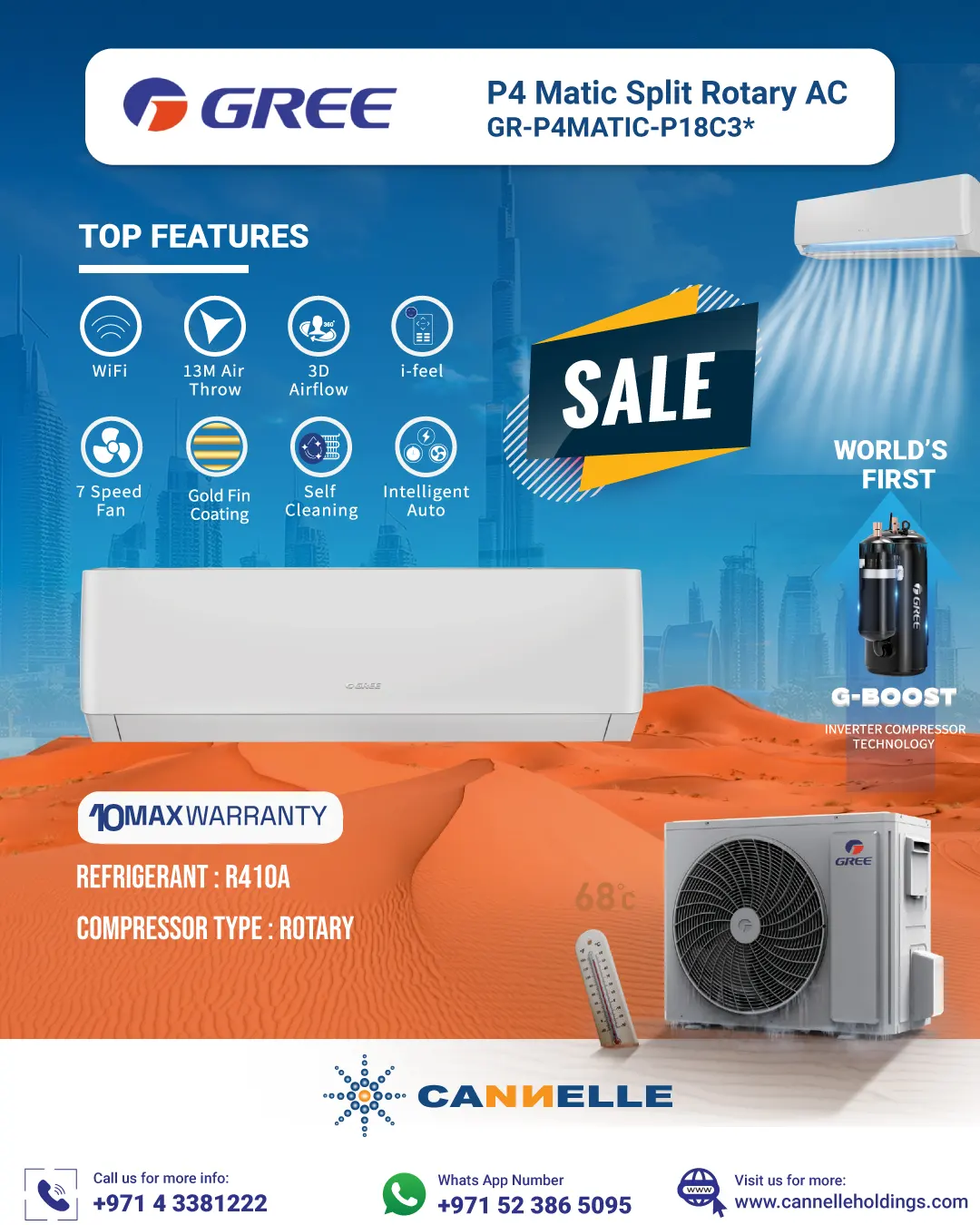
As an AC supplier in Dubai, Cannelle Holdings offers air conditioning solutions for different residential, commercial and industrial requirements.
Customers looking for an air conditioner dealer in Dubai can enquire about suitable equipment based on their required cooling capacity, application and project specifications.
As an AC unit distributor in the UAE, Cannelle Holdings supplies different types of air conditioning systems and HVAC installation materials for project requirements.
For contractors, installers and businesses requiring larger quantities, Cannelle Holdings also supports bulk procurement as an air conditioner wholesale dealer in Dubai, subject to product availability and project requirements.
AC and HVAC Products Available from Cannelle Holdings
Depending on the product range and availability, customers can enquire about:
- Split air conditioning units.
- Ducted and ductable AC systems.
- Package unit air conditioners.
- VRF air conditioning systems.
- Commercial and industrial cooling solutions.
- Copper pipes and copper coils.
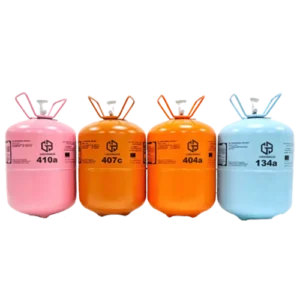
- Refrigerant gases.
- HVAC insulation materials.
- Thermostats and control accessories.
- Valves and other HVAC installation accessories.
Cannelle Holdings supports HVAC procurement requirements for residential, commercial and industrial projects across the UAE.
Customers can also explore the online product range at Cannelle store.
Contact Cannelle Holdings for AC Supply and Project Enquiries
- Website: https://cannelleholdings.com/
- Online Store: https://cannelle.store/
- Email: info@cannelleholdings.com
- Phone: +971 4 338 1222
Contact our team for product enquiries, quotations, stock availability and bulk AC supply requirements.
Conclusion
Calculating the correct AC tonnage is an important step when choosing an air conditioning system for a villa, office or warehouse in Dubai.
The process involves measuring the cooled area, estimating the base cooling requirement, considering Dubai’s climate conditions and converting the total BTU/h into refrigeration tons.
However, floor area alone cannot determine the correct AC capacity. Factors such as ceiling height, insulation, sunlight exposure, occupancy, electrical equipment and ventilation must also be considered.
Whether you are planning a residential installation, upgrading an office cooling system or sourcing air conditioning equipment for a warehouse, choosing the right AC capacity and system type can make a significant difference to cooling performance and operating costs.
If you are looking for a best AC supplier in Dubai, Cannelle Holdings can assist with air conditioning products and HVAC materials for residential, commercial and industrial requirements.
Contact Cannelle Holdings today for AC product enquiries, quotations and bulk supply requirements, or visit Cannelle store to explore available products.
