



In the UAE, air conditioning systems operate for long hours throughout much of the year. While selecting the right copper pipe is important for reliable refrigerant flow, the insulation installed around the pipe is equally important for maintaining cooling efficiency and preventing condensation.
The right HVAC copper pipe insulation helps reduce unwanted heat transfer, protects cold refrigerant lines from condensation, and supports the efficient operation of split AC, VRF, ducted, and other air conditioning systems.
However, not every insulation material is suitable for every HVAC application. Insulation type, thickness, temperature range, pipe size, installation environment, moisture resistance, and workmanship all need to be considered before purchasing.
For contractors, MEP companies, AC technicians, facility managers, and project buyers, understanding these factors makes it easier to select the right AC pipe insulation in the UAE.
In this guide, we explain how to choose insulation for copper pipes used in air conditioning and refrigeration systems, what to consider for the UAE climate, and common mistakes to avoid.
Why Is Insulation Important for HVAC Copper Pipes?
Copper is an excellent conductor of heat, which makes it ideal for transferring refrigerant in air conditioning and refrigeration systems. However, this same property means an uninsulated refrigerant pipe can easily exchange heat with its surrounding environment.
Proper insulation creates a thermal barrier around the pipe.
For HVAC applications, good pipe insulation can help:
- Reduce unwanted heat gain or heat loss.
- Maintain the required refrigerant temperature.
- Control condensation on cold suction lines
- Improve overall HVAC system efficiency.
- Protect surrounding ceilings and surfaces from moisture.
- Reduce the risk of corrosion caused by persistent condensation.
- Improve long-term system reliability.
- Provide additional protection to the copper pipe.
For cold refrigerant lines, condensation control is particularly important in a hot and humid environment such as the UAE.
Why HVAC Pipe Insulation Is Especially Important in the UAE
The UAE climate presents challenging conditions for air conditioning systems. High outdoor temperatures, humidity, long operating hours, and significant cooling loads place continuous demands on HVAC equipment.
A refrigerant pipe passing through a hot ceiling void, service area, roof space, or outdoor environment can experience significant temperature differences.
If the insulation is inadequate or incorrectly installed, several problems can occur.
Condensation
A cold copper pipe can cause moisture from the surrounding air to condense on its surface. If the insulation is damaged, too thin, or poorly sealed, condensation can form and eventually drip onto ceilings or other building components.
Heat Transfer
Insufficient insulation allows heat from the surrounding environment to reach the refrigerant line. This can affect the temperature of the refrigerant and the overall performance of the air conditioning system.
Energy Loss
When an HVAC system has to work harder because of unnecessary heat transfer, energy consumption can increase.
Insulation Damage
Outdoor installations can expose insulation to sunlight, moisture, physical impact, and other environmental conditions. The insulation system therefore needs to be selected and installed according to the application.
This is why choosing the correct HVAC insulation material in the UAE should be considered part of the overall HVAC installation rather than an afterthought.
What Type of Insulation Is Used for AC Copper Pipes?
Different insulation materials are available for HVAC and refrigeration applications. The correct selection depends on the system, operating temperature, installation environment, required insulation thickness, and project specifications.
Common insulation materials used around HVAC copper pipes include:
NBR Rubber Insulation
NBR, or nitrile rubber, is widely used for HVAC and refrigeration applications.
It is a flexible closed-cell insulation material designed to provide thermal insulation and help control condensation.
NBR rubber insulation is commonly used for:
- Split air conditioning systems
- Refrigeration pipework
- VRF and VRV systems
- Ducted AC systems
- Chilled-water applications
- Commercial HVAC installations
Its flexibility also makes it practical for installation around copper pipes with bends and fittings.
PE or Foam Insulation
Foam-based insulation products are also available for HVAC and piping applications.
They can provide thermal protection and are used in selected residential, commercial, and plumbing applications depending on the product specification.
The appropriate material should always be selected according to the operating temperature and project requirements.
Fibreglass and Mineral Wool
Fibreglass and mineral wool are commonly used for larger HVAC systems, ductwork, equipment, and high-temperature applications.
They are generally not the first choice for flexible insulation around small refrigerant copper pipes in typical split AC installations, where flexible closed-cell insulation is often more practical.
What Is the Best Insulation for AC Copper Pipes?
There is no single insulation material that is automatically suitable for every HVAC project.
For typical air conditioning and refrigeration pipework, closed-cell elastomeric or NBR rubber insulation is commonly considered because it combines flexibility with thermal and condensation-control properties.
However, the correct product depends on:
- Refrigerant pipe temperature
- Copper pipe diameter
- Required insulation thickness
- Indoor or outdoor installation
- Ambient temperature and humidity
- Exposure to sunlight
- Mechanical protection requirements
- Manufacturer specifications
- Local project specifications
For commercial and industrial projects, engineers and consultants may specify a particular insulation material, density, thickness, thermal conductivity, or fire-performance requirement.
Therefore, always check the project specification and manufacturer’s technical data before purchasing.
How to Choose the Correct HVAC Pipe Insulation Thickness
One of the most important questions contractors ask is:
What thickness of insulation is required for AC copper pipes?
No universal thickness applies to every air conditioning system.
The required thickness depends on factors such as:
- Copper pipe diameter
- Refrigerant temperature
- Ambient temperature
- Relative humidity
- Installation location
- Pipe operating conditions
- Condensation-control requirements
- Applicable project specifications
For example, an indoor refrigerant pipe installed in a controlled environment may have different requirements from a pipe installed in a hot plant room, ceiling void, roof area, or exposed outdoor location.
Instead of selecting insulation thickness based only on pipe size, the complete operating environment should be considered.
Why Thicker Insulation Is Not Always Automatically Better
A common misconception is that simply using the thickest insulation available will always provide the best result.
In practice, the correct insulation thickness should be based on the application and required thermal performance.
Using an unsuitable thickness can create installation challenges, increase material costs, and make it difficult to seal joints and fittings properly.
For larger HVAC projects, insulation thickness should be selected according to engineering calculations, project specifications, and manufacturer recommendations.
How to Match Insulation to Copper Pipe Size
HVAC copper pipes are available in various diameters, including common sizes such as:
- 1/4 inch
- 3/8 inch
- 1/2 inch
- 5/8 inch
- 3/4 inch
- 7/8 inch
- Larger diameters for commercial and industrial applications
The internal diameter of the insulation must be compatible with the outside diameter of the copper pipe.
The insulation should fit the pipe properly without creating unnecessary gaps.
For example, if you are installing insulation around a 5/8-inch copper refrigerant pipe, the insulation should be selected specifically for the pipe’s outside diameter and the required insulation thickness.
A proper fit helps maintain continuous thermal protection along the refrigerant line.
Should Both AC Copper Pipes Be Insulated?
This depends on the air conditioning system and manufacturer specifications.
In many split and VRF installations, refrigerant lines have different operating conditions. The suction/gas line is typically insulated to prevent condensation and unwanted heat gain.
Some systems also require insulation on the liquid line depending on system design, ambient conditions, pipe routing, and manufacturer requirements.
Therefore, installers should not assume that every copper pipe should be treated identically.
Always follow the AC manufacturer’s installation instructions and project specifications.
How to Prevent Condensation on AC Copper Pipes
Condensation is one of the most common reasons for HVAC insulation problems.
When the surface temperature of a pipe is below the surrounding air’s dew point, moisture can form on the pipe surface.
Proper insulation helps keep the outer surface of the insulation above the condensation point.
To reduce condensation problems:
Use the Correct Insulation Thickness
The insulation must provide sufficient thermal resistance for the operating conditions.
Seal All Joints Properly
Even good-quality insulation can fail if joints are left open. All joints should be properly sealed according to the insulation manufacturer’s installation instructions.
Avoid Compression
Compressing flexible insulation can reduce its effective thickness and thermal performance. Installers should avoid unnecessarily crushing the insulation around bends and supports.
Protect Damaged Sections
Cuts, gaps, tears, and damaged insulation should be repaired before commissioning the system.
Pay Attention to Fittings
Valves, bends, joints, and connections can become weak points if they are not insulated correctly. Continuous insulation should be maintained wherever practical.
Common Mistakes When Installing Copper Pipe Insulation
Even when high-quality insulation is purchased, poor installation can reduce its effectiveness.
1. Using the Wrong Size
Insulation that is too large can leave gaps around the pipe, while insulation that is too small may be compressed.
2. Leaving Joints Unsealed
Open joints can allow warm, humid air to reach the cold pipe surface.
3. Damaging the Insulation During Installation
Cuts and tears can compromise the insulation system.
4. Compressing the Insulation
Compression can reduce the insulation’s effective thickness.
5. Ignoring Pipe Supports
Improper support can compress insulation and create thermal bridges.
6. Using Indoor Insulation Outdoors Without Protection
Insulation exposed to sunlight, rain, moisture, or mechanical damage may require additional protection depending on the product.
7. Choosing Only by Price
The cheapest insulation material may not provide the required thermal performance, durability, or condensation control.
For HVAC projects, material compatibility and installation quality are more important than simply choosing the lowest price.
HVAC Pipe Insulation for Split AC Systems
Split air conditioners are widely used in UAE homes, apartments, offices, shops, and commercial buildings.
During installation, copper refrigerant pipes connect the indoor and outdoor units.
Proper insulation helps protect the refrigerant pipe from the surrounding environment.
When selecting split AC pipe insulation, consider:
- Copper pipe diameter
- Refrigerant type
- Installation length
- Pipe temperature
- Indoor or outdoor routing
- Required insulation thickness
- Condensation risk
- Manufacturer specifications
Correct insulation is particularly important where copper pipework passes through walls, ceilings, service shafts, and other areas where condensation could cause building damage.
HVAC Pipe Insulation for VRF and Commercial Systems
VRF and commercial HVAC systems can contain extensive refrigerant pipe networks.
These systems may have long pipe runs passing through:
- False ceilings
- Service shafts
- Plant rooms
- Corridors
- Roof areas
- Mechanical rooms
- Commercial spaces
Because of the length and complexity of these systems, consistent insulation installation is essential.
For larger projects, contractors should follow the approved MEP drawings and insulation specifications rather than selecting materials based only on standard residential AC practices.
Indoor vs Outdoor Copper Pipe Insulation
The installation environment should always be considered when selecting insulation.
Indoor Applications
Indoor refrigerant pipe insulation is generally protected from direct sunlight and weather exposure.
However, installers still need to consider:
- Condensation
- Humidity
- Mechanical damage
- Joint sealing
- Required thermal performance
Outdoor Applications
Outdoor pipework faces additional challenges, including:
- UV exposure
- High temperatures
- Rain and moisture
- Dust
- Physical damage
- Temperature fluctuations
Depending on the insulation system, additional protective measures may be required.
The insulation manufacturer’s recommendations should be followed for exposed installations.
What Should You Look for When Buying HVAC Insulation in the UAE?
Before purchasing insulation materials, HVAC contractors and procurement teams should check several technical details.
1. Material Type
Confirm whether the insulation is suitable for HVAC and refrigeration applications.
2. Thermal Performance
Check the manufacturer’s thermal conductivity data at the relevant operating temperatures.
3. Temperature Range
Make sure the insulation is designed for the operating temperature of the HVAC system.
4. Insulation Thickness
Select the thickness according to the project specification and condensation-control requirements.
5. Pipe Compatibility
Confirm the insulation’s internal diameter matches the copper pipe size.
6. Moisture Resistance
For cold refrigerant lines, moisture resistance and vapour protection are important.
7. Installation Environment
Determine whether the pipe is installed indoors, outdoors, in a ceiling void, plant room, or another environment.
8. Fire Performance
For commercial buildings and major projects, fire-performance requirements may apply. Always check the project specification and relevant certification.
9. Product Quality and Availability
For large HVAC projects, consistent availability is important. A reliable HVAC insulation supplier in the UAE can help contractors obtain matching sizes and specifications throughout the project.
HVAC Insulation Materials Available from Cannelle Holdings
Cannelle Holdings supplies insulation materials and tapes for HVAC, refrigeration, plumbing, and industrial applications in the UAE.
Our insulation range includes products such as:
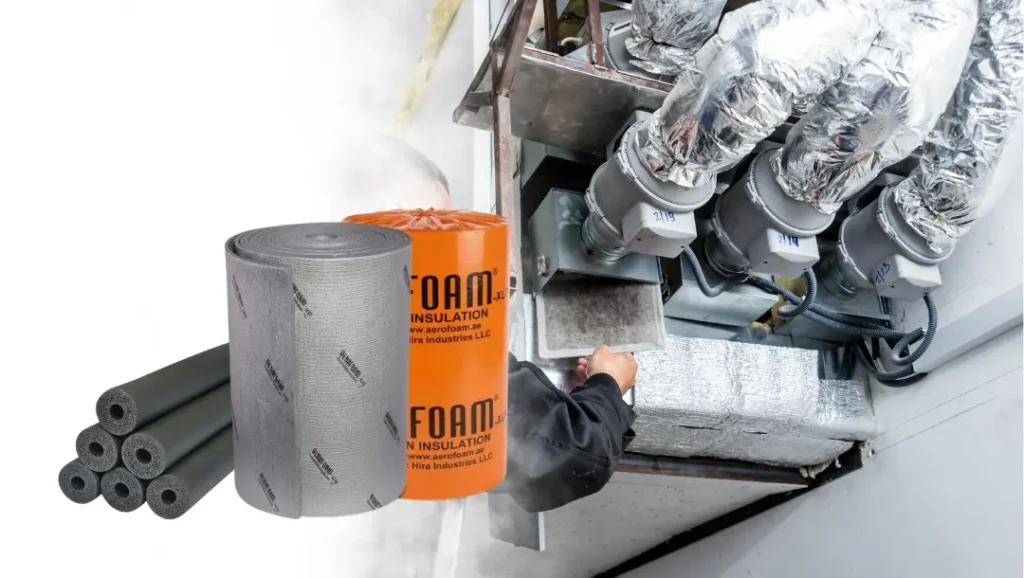
- Rubber pipe insulation
- Foam insulation
- Fibreglass and mineral wool insulation
- NBR foam tape
- XLPE foam tape
- Aluminium foil tape
- HVAC insulation accessories
The company supplies insulation solutions for residential, commercial, and industrial applications and can assist contractors in selecting products based on pipe size, application, and project requirements.
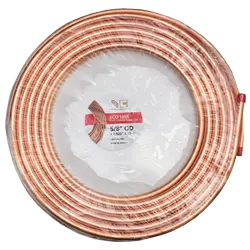
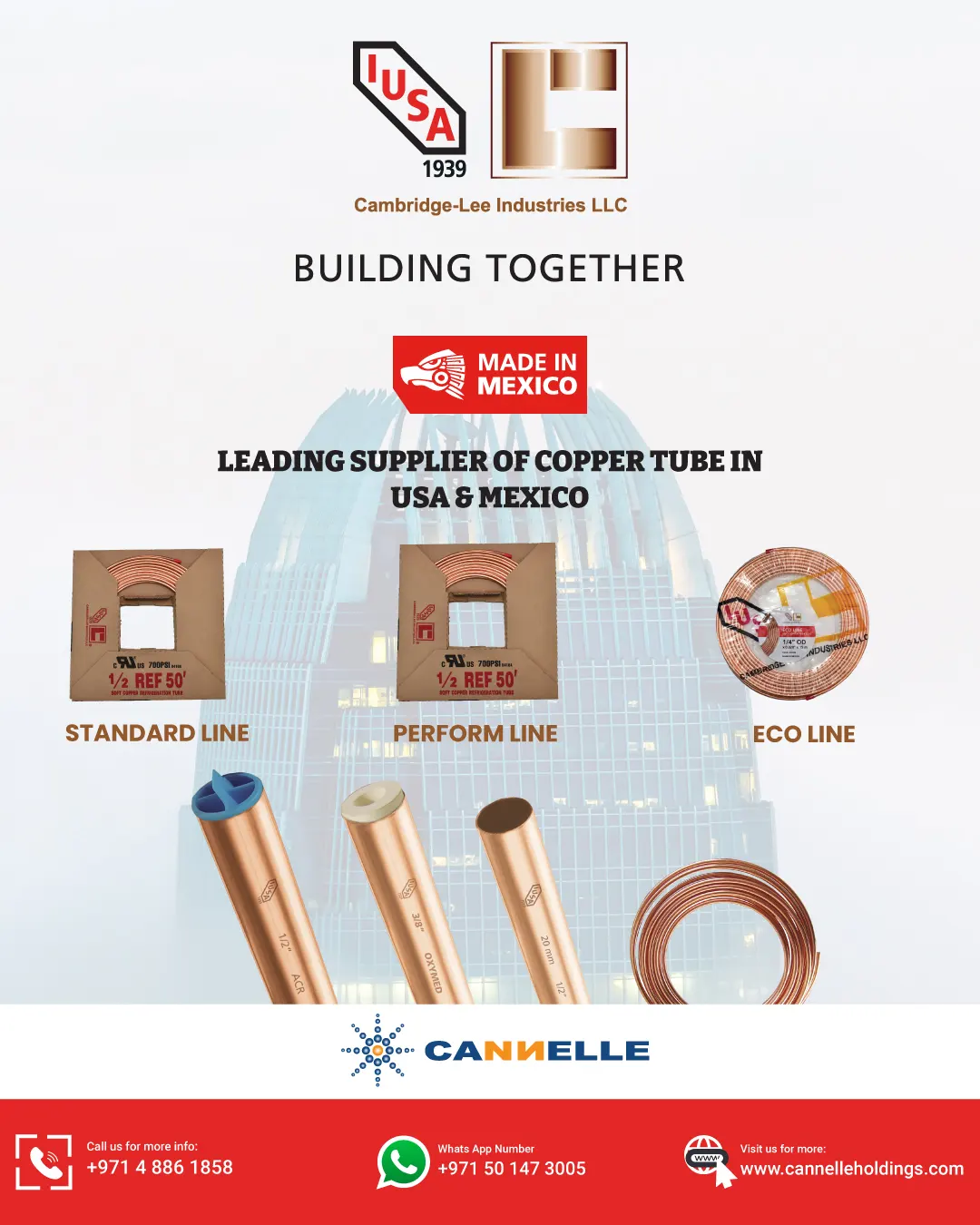
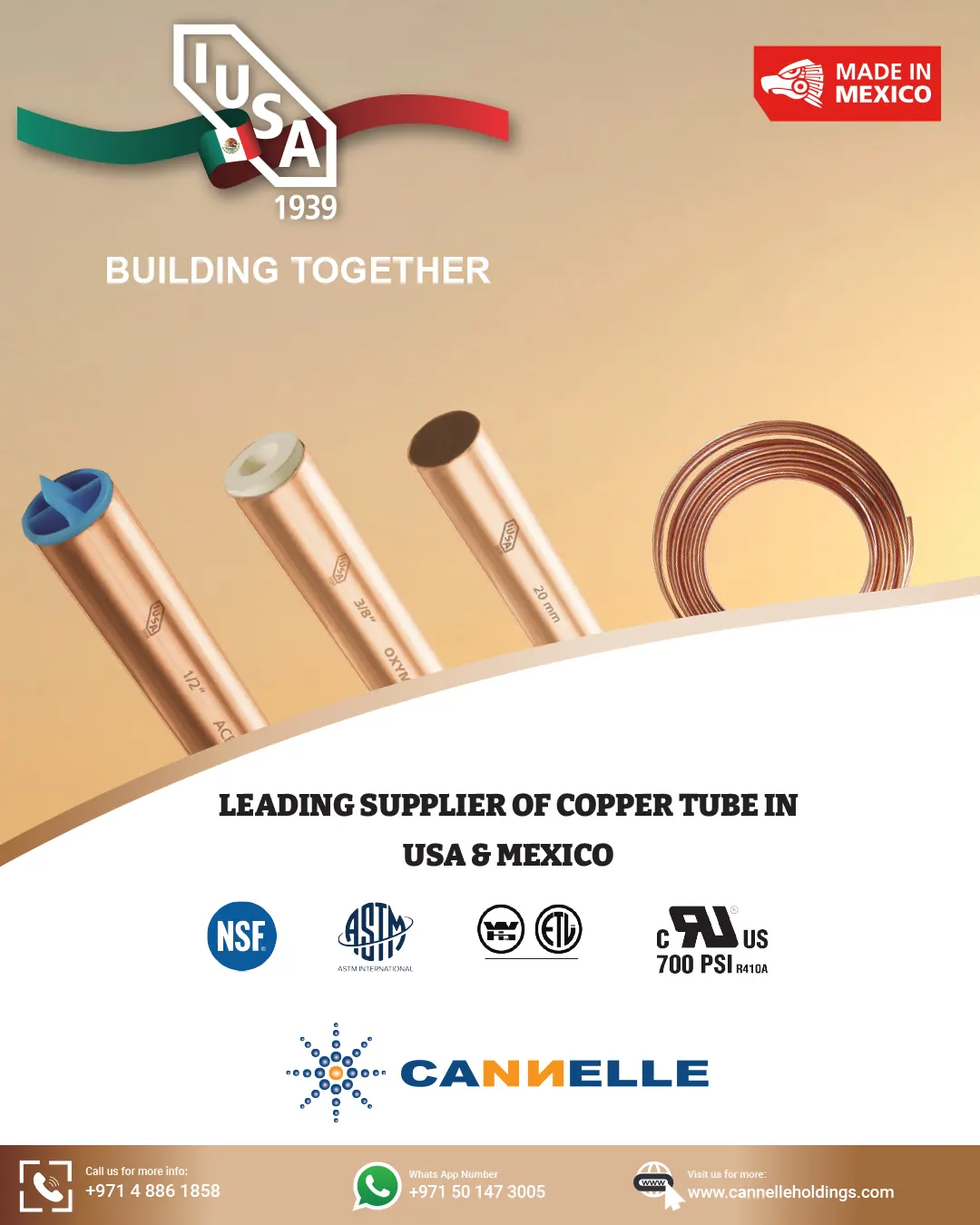
For projects requiring copper piping and insulation together, Cannelle Holdings also supplies copper pipes and coils for HVAC and refrigeration applications. Its copper range includes products manufactured to specifications including ASTM B280, ASTM B743 and ASTM B75, depending on the product.
Why Buy HVAC Insulation from a UAE Supplier?
Working with a local HVAC material supplier can make procurement easier, particularly for contractors managing projects with multiple material requirements.
A UAE-based supplier can help with:
- Product availability
- Different insulation sizes
- HVAC copper pipes and coils
- Tapes and accessories
- Project quantities
- Technical product information
- Wholesale requirements
- Delivery within the UAE
For large commercial and MEP projects, having a supplier that can provide multiple HVAC materials can also simplify procurement.
How to Choose the Right HVAC Insulation: Quick Checklist
Before purchasing insulation for copper pipes, check the following:
Copper pipe size: Confirm the outside diameter of the copper pipe.
Insulation material: Choose a material designed for the HVAC application.
Required thickness: Follow project specifications and manufacturer recommendations.
Operating temperature: Make sure the insulation can handle the system’s operating conditions.
Condensation control: Ensure the insulation provides adequate protection for cold refrigerant lines.
Installation location: Consider whether the pipe is indoors, outdoors, in a ceiling void, or in a plant room.
Joint sealing: Make sure compatible adhesive, tape, or sealing methods are available.
Fire requirements: Check project and building requirements where applicable.
Product availability: For large projects, confirm that the required sizes and quantities are available.
Final Thoughts
Choosing the right HVAC copper pipe insulation in the UAE is an important part of a reliable air conditioning installation.
The correct insulation should be selected based on the copper pipe size, operating temperature, insulation thickness, installation environment, condensation risk, and project specifications.
For residential split AC installations as well as commercial and industrial HVAC projects, good insulation and proper installation can help protect refrigerant lines, reduce unwanted heat transfer, control condensation, and support reliable system performance.
If you are sourcing AC pipe insulation, HVAC insulation materials, copper pipes, copper coils, or related HVAC accessories in the UAE, Cannelle Holdings can assist with product selection and project requirements.
Need HVAC insulation for your project? Contact Cannelle Holdings for product availability, specifications, and a quotation.
